A piston ring's surface treatment determines its wear resistance, sealing and corrosion protection. This guide covers chrome plating, nitriding, phosphating, ferroxiding (Ferroxide) and C.T.I.'s in-house Diamond-Like Carbon (DLC) coating — with the color of each finish — plus the Moly and PVD coatings found on the market.
A piston ring's surface treatment determines its wear resistance, sealing, lubrication and corrosion protection, directly affecting engine life, oil consumption and emissions. Common piston-ring surface treatments include chrome plating, nitriding, phosphating, ferroxiding (Ferroxide) and C.T.I.'s in-house Diamond-Like Carbon (DLC, "Black Diamond") coating. Each is explained below, along with the color each finish produces.
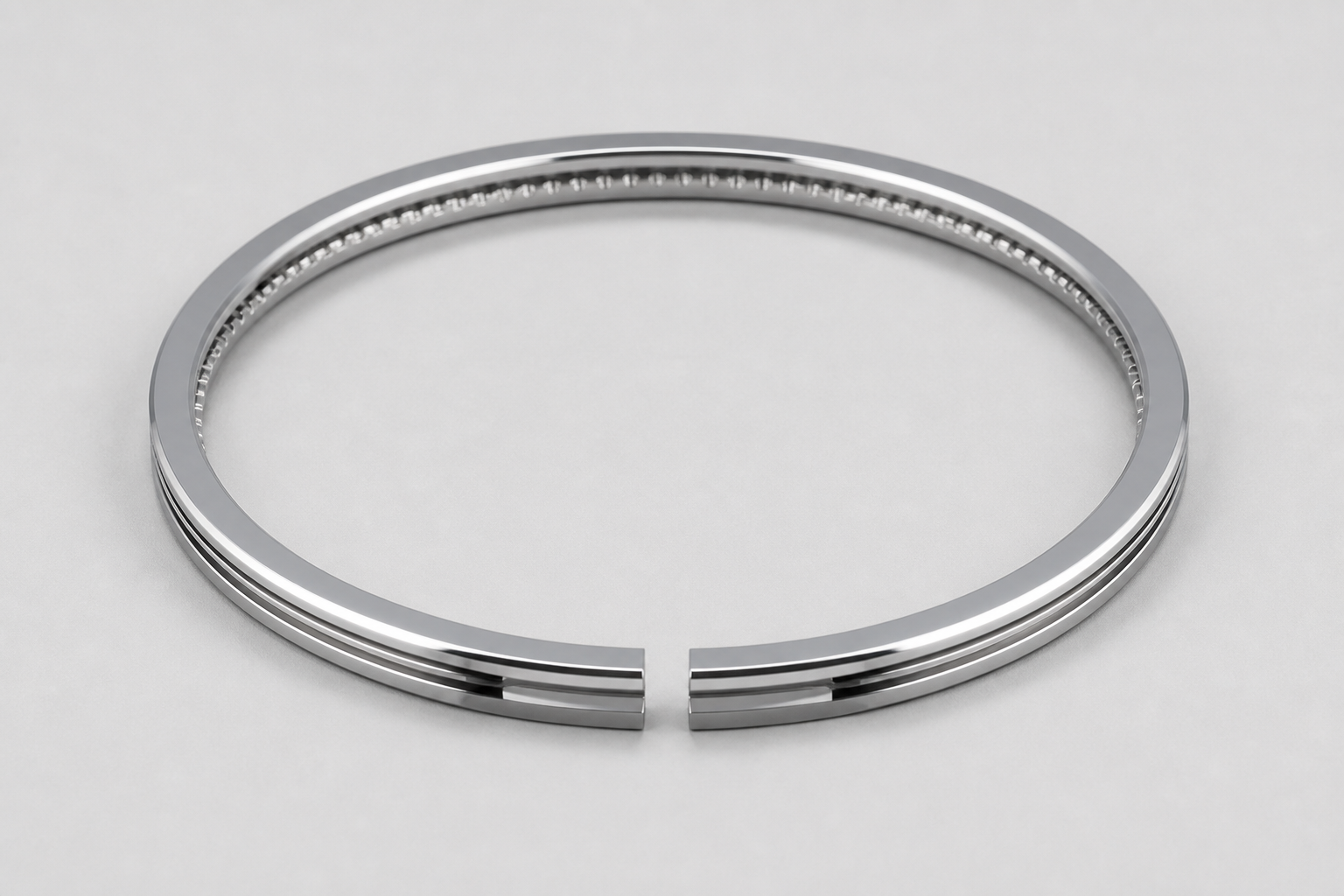
Chrome plating is the classic piston-ring surface treatment: a dense chromium-alloy film is deposited on the surface, giving a bright silver appearance. The chrome layer offers excellent hardness, wear resistance and corrosion resistance, and is the traditional choice for the top ring of high-load engines. However, the process is relatively complex and costly, and hexavalent-chromium plating faces increasingly strict environmental regulations.
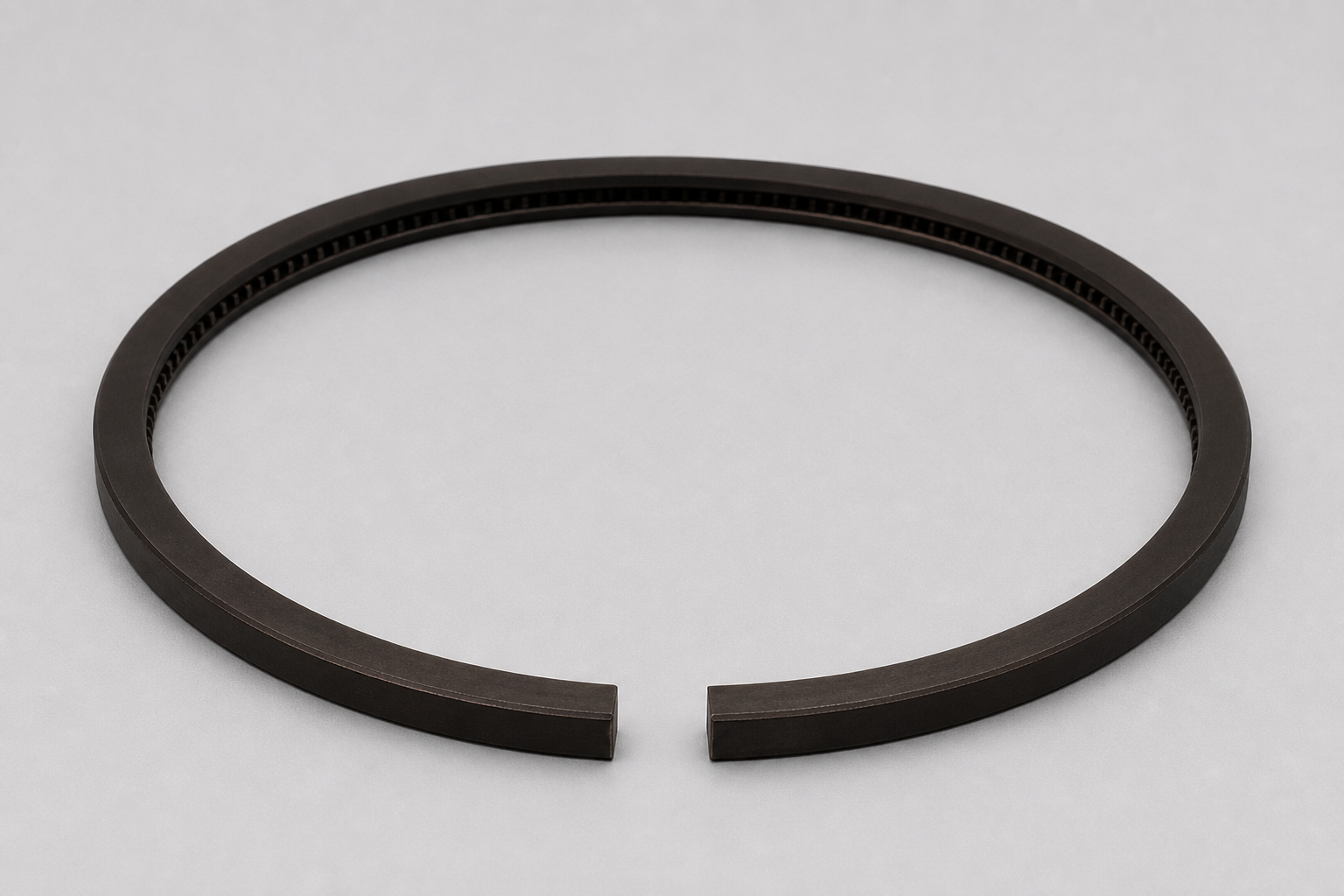
Nitriding places the ring in an ammonia atmosphere; at high temperature, nitrogen atoms diffuse into the surface to form a nitride layer that greatly raises hardness and wear resistance. The nitride film is denser and more uniform than plating, with better wear and corrosion resistance, and a brownish-black appearance. It is often used on high-performance rings for high-power racing or heavy engineering machinery.
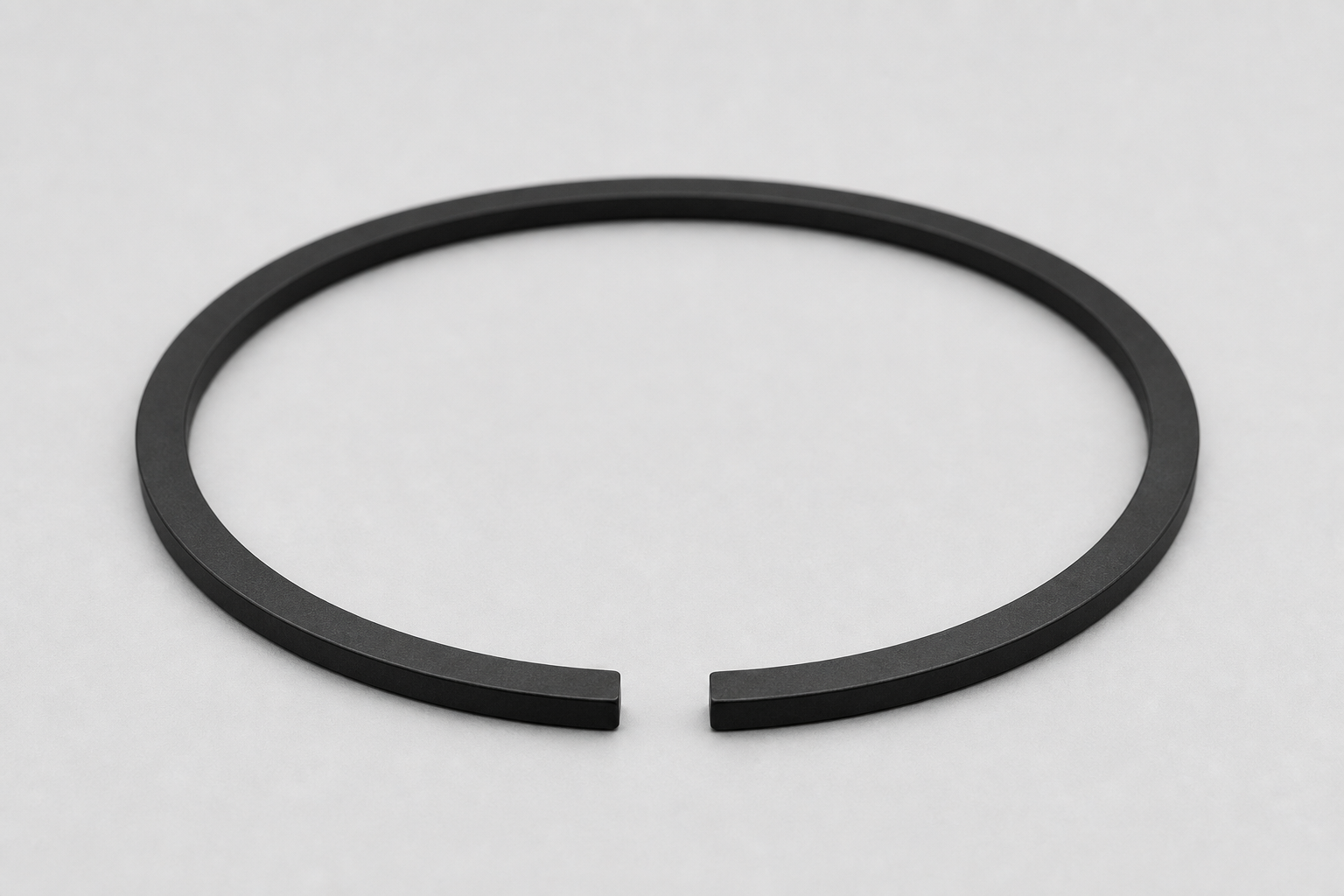
Phosphating is usually applied by chemical immersion, forming a dense black phosphate conversion film with a deep matte black appearance. It improves wear and heat resistance and compatibility with lubricating oil, enhancing sealing. Simple, economical and effective, it is widely used on piston rings for all kinds of engines.
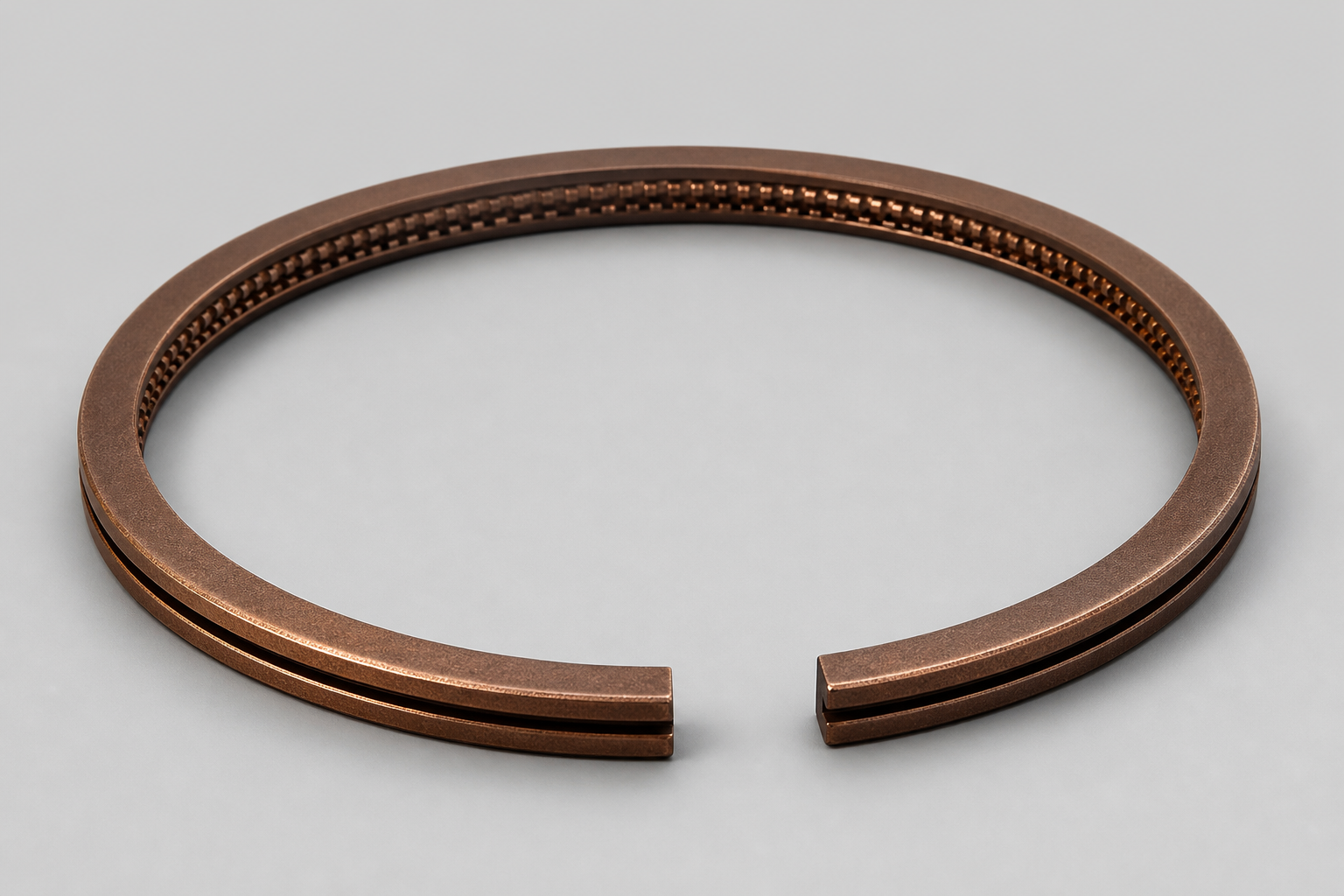
Ferroxiding forms an oxide film on the ring surface with a distinctive bronze / antique-bronze color. This oxide layer improves run-in lubrication, oil retention and anti-scuffing, and boosts corrosion resistance. Simple and low-cost, it is a common base treatment for cast-iron rings and is often combined with other coatings.
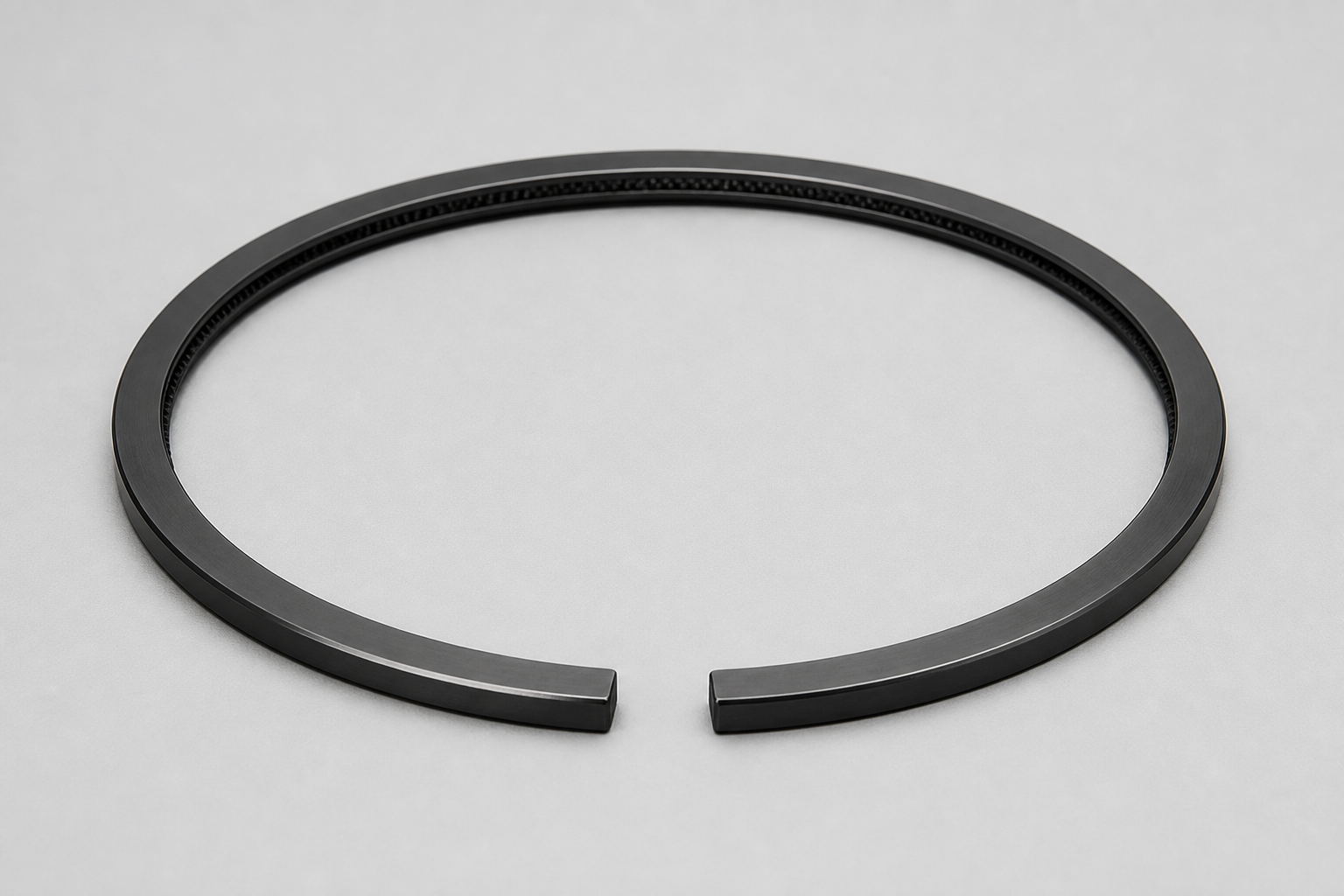
DLC deposits an amorphous carbon film with a structure close to diamond; its hardness, wear resistance and low friction rival or exceed nitriding, with a graphite-black, metallic-sheen appearance. It greatly extends service life and cuts friction, oil consumption and emissions, and is especially suited to high-power, high-speed engines. It is also an eco-friendly alternative to hexavalent-chromium plating that meets EU environmental rules. C.T.I. holds two patents (US and Taiwan) for its DLC coating, brand-named "Black Diamond". For hardness, friction data and patents, see our deep-dive: "What Is DLC (Diamond-Like Carbon)? The Best Piston-Ring Surface Treatment".
Each surface treatment has its own strengths and trade-offs; the right choice depends on the engine's operating conditions, cost and environmental requirements. As technology advances, DLC and other advanced coatings are steadily becoming the mainstream for high-performance piston rings.
© C.T.I. Traffic Industries Co., Ltd. Original content by C.T.I. — reproduction, copying or commercial use without permission is prohibited.
Back